
Commercial Wireless Lighting Systems: Definition, Categorization, Comparison
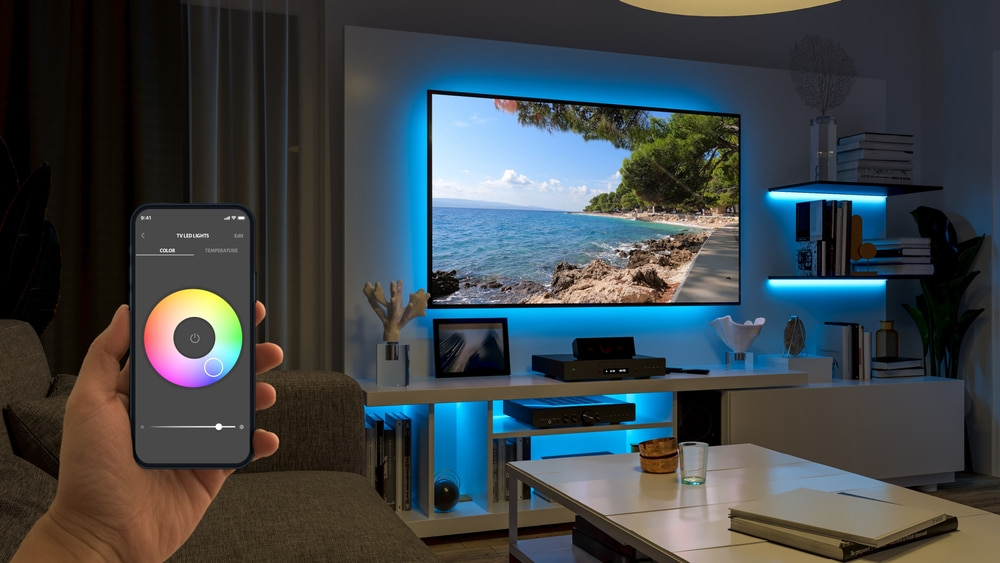
Wireless lighting became an integral part of many business environments, enabling them to enhance occupant comfort and professional image, while simultaneously improving energy efficiency, operational flexibility, and facility management.
However, with numerous options available throughout Florida, choosing between commercial wireless lighting systems can become overwhelming. Fortunately, we’re here to help you make an informed decision and select the configuration ideally suited to your specific needs.
What is a wireless lighting system?
- Wireless lighting systems are networked solutions that enable lights, sensors, switches, and control hubs to communicate wirelessly.
Unlike traditional setups that use hardwired signal cables, wireless systems are based on radio-frequency (RF) communication, using Bluetooth Mesh, Zigbee, Thread, Wi-Fi, or proprietary RF protocols to control lighting throughout the building.
Wireless systems deliver a range of benefits, including (but not limited to):
- Flexible zoning and scene control;
- Remote configuration;
- Energy monitoring;
- Integration with building automation.
In addition, these setups allow for much easier expansion (compared to hardwired control networks), which is why they’re increasingly being used in demanding and mission-critical settings, such as commercial, industrial, hospitality, municipal, religious, and many others.
What are the components of wireless lighting systems?
The majority of modern wireless systems consist of:
- Fixtures/drivers w/ wireless capabilities;
- Wireless gateways or controllers;
- Sensors (daylight harvesting, occupancy, etc.);
- Wall switches
- Scene controllers
- Central monitoring/programming software platform.
However, note that the specifics of the configuration can (and typically do) differ, depending on the application and the environment.
What are the different types of wireless lighting systems?
Today, we have 7 widespread system categories:
- Bluetooth Mesh: One of the most common systems in commercial settings today, thanks to the ability to support large networks with hundreds of nodes.
- Zigbee (3.0 & Green Power): Low-power mesh networking protocol, widely used in professional lighting due to strong interoperability and integration with building automation.
- Thread / Matter: Emerging low-power, IP-based mesh networking protocol, designed for future-proofing and cross-manufacturer compatibility due to native IPv6 support and easy IT integration.
- Wi-Fi: Offers high bandwidth and easy integration with IT networks; typically paired with cloud-based services for remote scheduling and monitoring.
- Proprietary RF mesh systems: Optimized for reliable performance in dense commercial settings, these systems typically offer superior range, durability, and guaranteed interoperability.
- Hybrid systems: A combination of wired and wireless devices/networks, these configurations are typically used for phased retrofits or when the building has strict IT/architectural requirements.
- Cloud IoT (Internet of Things) Platforms (not to be confused with the IoT protocol): IoT systems use wireless technologies for remote control and monitoring, energy and occupancy analytics, space utilization and asset tracking, and fault detection.
Wireless lighting systems side-by-side
| System Type | Strenghts | Limitations | Best for: |
| Bluetooth Mesh | Extremely scalable;
Mobile commissioning tools; Energy-efficient; Good interoperability; |
Limited long-range performance (compared to proprietary RF);
Can be slower for large broadcasts; |
Offices, corporate spaces, classrooms, retail stores, multi-room commercial setups |
| Zigbee | Mature system;
Strong device support; Good for large, mixed-brand networks; Proven performance in commercial environments; |
Requires careful channel planning to avoid Wi-Fi interference;
Often requires gateways for cloud/BAS integration; |
Hospitality, retail chains, multifamily buildings, campuses w/ mixed vendors |
| Thread / Matter | True IP networking;
Easy IT integration; High security; Excellent multi-vendor interoperability; |
Emerging technology in commercial markets (not extensively tested);
Limited fixture-level support (for now); |
Future-oriented, smart corporate facilities, campuses, mixed-use buildings |
| Wi-Fi | High bandwidth (excellent support for advanced features);
Easy IT/cloud integration; Good for smaller-scale installs; |
Not optimized for high node count;
Higher power usage; Potential to strain IT networks if unmanaged; |
Smaller commercial spaces, incl. offices, hospitality establishments, retail boutiques |
| Proprietary RF systems | Superior range & reliability;
Optimized for professional/commercial settings; Strong manufacturer support; |
Usually vendor-locked;
Limited cross-brand interoperability; Higher upfront investment; |
Large, complex settings, incl. office buildings, auditoriums, stadiums, campuses, etc. |
| Hybrid systems | Ideal for phased upgrades & partial retrofits;
Bridges old & new infrastructure; High reliability; |
Complex to design;
Skilled commissioning required; Cost varies dramatically; |
Older buildings, multi-phase renovations, healthcare facilities, religious establishments, mixed infrastructure environments. |
| IoT-based systems | Deep analytic capability;
Remote management & diagnostics; Enterprise-level scalability; |
Requires gateways + subscription/cloud;
Higher upfront & ongoing costs; |
Corporate campuses, retail chains, healthcare complexes, industrial facilities, smart cities |
Who designs & installs future-ready commercial wireless lighting systems near me in Florida?
For nearly three decades, Pro Audio Services has been the preferred provider of cutting-edge lighting solutions, from Miami to Destin and all across Florida. Our long-term expertise enables us to design lighting control systems and wireless lighting setups tailored to the specific operational requirements of your industry and facilities. Reach out to us today to find out more about the different types of lighting solutions we offer, as well as how they can benefit your business efforts!
