
Distributed Audio vs. Sound Reinforcement: What’s the Difference

When people talk about better sound in a home, business, church, or event space, the terms “distributed audio” and “sound reinforcement” often get used interchangeably. They both involve speakers, amplifiers, and careful system design, but they solve very different problems. Distributed audio is usually about sending clear, even music or announcements throughout multiple rooms or zones, often at comfortable background levels. Sound reinforcement is about making a live source, such as a speaker, singer, or instrument, louder and more intelligible for an audience.
Understanding the difference matters because the right system affects everything from speaker placement and equipment choices to budget, acoustics, and day-to-day ease of use. Before investing in an audio setup, let our sound reinforcement specialists in Orlando shed light on a few important considerations that you need to keep in mind. We’ll help you understand whether you need even background coverage, stronger live presentation support, or a system that blends both.
What does distributed audio mean?
Distributed audio indicates that a sound is spread across multiple speakers throughout a building, room, or campus area so people hear consistent audio in different locations. Instead of relying on one loud source at the front of the room, the system uses carefully placed speakers to create balanced coverage.
This type of system is often used for background music, announcements, paging, ambience, or general communication. You might see it in hotels, restaurants, schools, houses of worship, retail spaces, lobbies, hallways, waiting areas, and multi-room facilities.
The goal is not usually to make the sound feel dramatic or stage-focused. It is to make audio feel present, clear, and comfortable across the space. A well-planned distributed system can support different zones, which means one area may have music while another receives announcements or operates at a different volume.
Common planning questions include:
- Which areas need audio coverage?
- Should each room or zone have separate control?
- Will the system support speech, music, paging, or all three?
- How loud should each area be during normal use?
- Does the facility need priority messaging for announcements?
What is sound reinforcement?
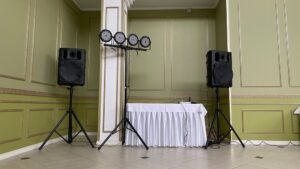 It is the process of making live or source audio stronger, clearer, and easier for an audience to hear. This usually applies to presenters, performers, worship leaders, trainers, panels, musicians, and other sources that need to be heard across a specific audience area.
Sound reinforcement systems may include microphones, mixers, digital signal processors, amplifiers, loudspeakers, monitors, and control interfaces. The design focuses on clarity, coverage, feedback control, volume balance, and the relationship between the speaker or performer and the audience.
This is especially important in auditoriums, sanctuaries, performance spaces, gyms, conference rooms, lecture halls, and event venues. In these settings, people are usually gathered for a shared experience, so speech intelligibility and audio quality matter more than simple background coverage.
Which system does a commercial facility need?
Many need both, but not always in the same areas. Distributed audio may serve corridors, lobbies, dining areas, or common spaces. Sound reinforcement may support a stage, meeting room, worship platform, training area, or event space.
For example, a hotel may use distributed audio for music and paging in public areas, while a ballroom needs reinforcement for speakers and events. A church may use reinforcement in the main sanctuary and distributed audio in classrooms, gathering areas, or outdoor zones. A corporate facility may use reinforcement in presentation rooms and distributed audio in shared spaces.
This is why planning a PA system for a commercial facility should begin with the purpose of each zone. The system should support real workflows instead of treating the whole building as one identical listening area.
Why acoustics and layout change the design
Audio design depends heavily on the physical space. Ceiling height, wall materials, floor surfaces, glass, concrete, seating layout, crowd size, and room shape all affect how sound behaves. A speaker plan that works in a carpeted conference room may not work in a gym or worship space with reflective surfaces.
Distributed systems need speaker spacing and zoning that avoid dead spots or uneven volume. Reinforcement systems need careful speaker placement, microphone selection, and tuning so the audience can hear clearly without feedback or harshness.
Good planning should also account for who will operate the system. A front desk team, pastor, teacher, venue manager, or facilities director may need different controls than a trained AV technician.
How audio fits into the larger AV environment
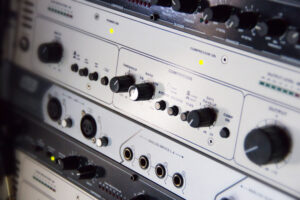
Audio may connect with displays, video conferencing, livestreaming, control systems, paging, security, lighting, and network infrastructure. A project that starts as a speaker upgrade can quickly reveal needs around cabling, user controls, equipment racks, or room scheduling.
That is why businesses should know what to look for in a commercial AV company. A strong partner should understand the full environment, not just the speakers. They should ask how the space is used, what systems need to work together, who operates them, and how the facility may change over time.
Visual communication may also be part of the same conversation. In larger venues, how video walls improve communication in commercial spaces can become relevant when announcements, live content, schedules, worship lyrics, presentations, or wayfinding need to support what people are hearing.
Where can I find top-rated sound reinforcement specialists in Orlando, FL?
Pro Audio Services can help you decide whether your facility needs distributed coverage, stronger live audio support, or a coordinated system that includes both. Whether your project is near the Kia Center or elsewhere in the region, our team can assess the space, recommend practical system design, install commercial-grade equipment, and provide training for day-to-day operation.
Get in touch with us to schedule a consultation and start planning audio that supports your facility’s real communication needs. Contact us today!
