
Line Array vs. Point Source Speakers: Finding the Right Fit for Your Venue
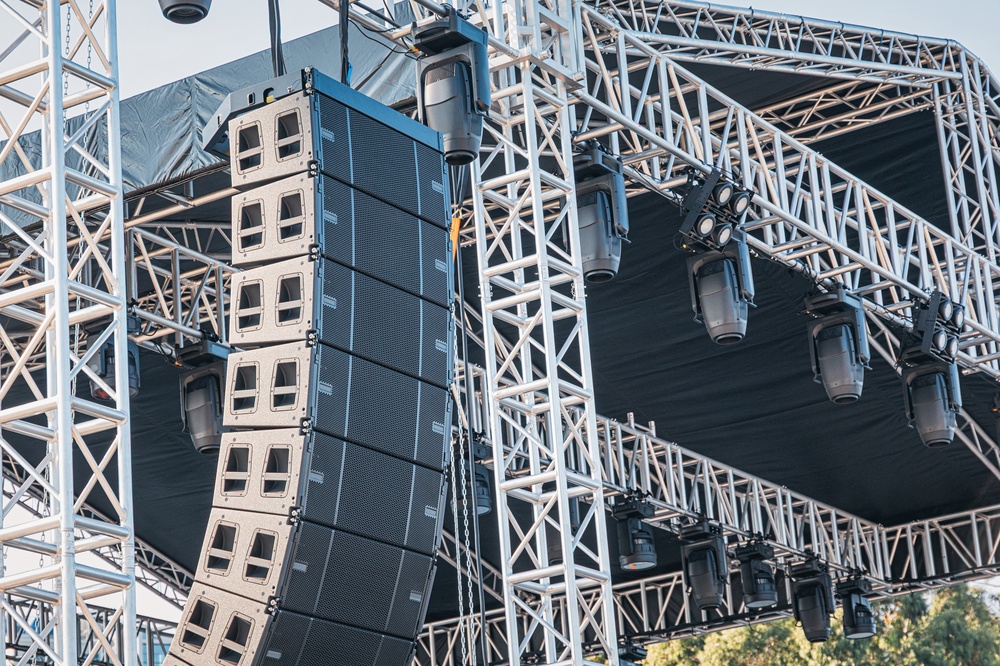
Look up at the stage during a big concert, and you’ll see tall, curved columns of speakers hanging overhead. Step into a hotel ballroom or a church fellowship hall, and the speakers are more likely to be single cabinets on brackets or stands. Both can deliver clear music and speech, but they spread energy in different ways, and picking the wrong one leaves some seats blasted while others strain to follow along.
It’s one of the first questions sound reinforcement specialists in Naples ask when they walk a new venue, because the right answer depends on the room as much as the budget. Keep reading as we compare the two designs of speakers and match each one to the spaces they suit.
What’s the difference between line array and point source speakers?
 The core difference is how each design spreads energy. A point source radiates from a single acoustic center, so its output expands outward in every direction, like an inflating balloon. A line array stacks several identical, closely spaced cabinets so they combine into one tall source that covers wide from side to side but stays tightly controlled from top to bottom.
How point source speakers behave
Most speakers people picture are point sources: a single box with a woofer and a horn, or a speaker set into the ceiling. Each one covers a defined pattern, such as 90 degrees wide by 60 degrees tall. They’re compact and affordable, and they mount easily on a wall bracket or in a ceiling grid. Grouping several into a cluster extends coverage, though each cabinet still behaves on its own.
How line arrays behave
A line array hangs multiple elements in a vertical column, usually with a slight curve. The straighter upper boxes aim toward the back rows, while the more angled lower boxes cover the seats up front, a profile often called a J shape. Because vertical coverage is so narrow, less energy splashes onto the ceiling and floor, which helps clarity in rooms with hard surfaces.
Why level over distance matters
In open air, output from a single box follows the inverse square law, dropping roughly 6 dB each time the distance doubles. Within its near field, a properly sized array loses closer to 3 dB per doubling, depending on the array’s length and the frequency. In a long room, that gap decides whether the front rows get blasted so the back can hear or the level stays fairly even throughout.
Is a line array better than a point source?
Not automatically. A line array excels at one job: holding consistent level and clarity across long distances for large audiences. In a smaller room, that strength goes mostly unused, and a well-planned point source design can perform just as well for considerably less money. Before choosing, weigh a few practical factors:
- Throw distance: arrays keep their level farther back, which matters in deep halls and at outdoor events.
- Array length: an array needs enough cabinets to control lower frequencies, so a short stack of two or three boxes gives up much of that advantage.
- Ceiling height and rigging: arrays are usually flown from structural points overhead, and low ceilings can rule them out.
- Sightlines: a flown array is large and visible, so its hang position has to stay clear of video walls and digital signage positioned where eyes land.
- Cost: extra cabinets, amplifier channels, rigging hardware, and design modeling add up quickly.
Which type works best for different venue sizes and shapes?
As a general rule, point source designs suit smaller rooms and shorter throws, while line arrays earn their cost in large, deep, or tall spaces. Shape can matter as much as square footage, though.
Small rooms and low ceilings
Conference rooms, retail floors, and small chapels usually do best with point source speakers, often spread overhead so no listener sits right next to a loud cabinet. Restaurants are a familiar example, since keeping music and TVs below conversation depends on many small speakers running at low volume.
Large or deep venues
Arrays pull ahead in auditoriums and gymnasiums, and on outdoor stages, covering long distances with fewer level swings between rows. Very deep rooms may still add delay speakers partway back, with a DSP handling the timing and tuning so their output lines up with the main hang.
Unusual shapes and tough acoustics
Some rooms break the size rules entirely:
- Wide, shallow rooms: one center array can struggle to reach the sides, so several point sources spread across the front often cover better.
- Rooms with balconies: an array’s curve can be shaped to reach both the main floor and the balcony from a single hang.
- Hard, echoey spaces: stone churches and gyms reward tight vertical control, which is why digitally steerable column arrays are common in them.
Where can I find qualified sound reinforcement specialists near me in Naples?
 You can find them at Liaison Technology Group. Our Southwest Florida team has more than 25 years of experience designing and installing speaker setups for clients ranging from houses of worship to hospitality and retail venues.
We’re a state-certified Low Voltage Contractor, and every project starts with a consultation, followed by a design based on your input and the technical properties of your room.
That way, the choice between an array and point source speakers comes from how your space actually behaves. After installation, we configure everything and show your staff how to run it.
For venues anywhere between Hertz Arena and Marco Island, schedule a consultation with us to get started.
