
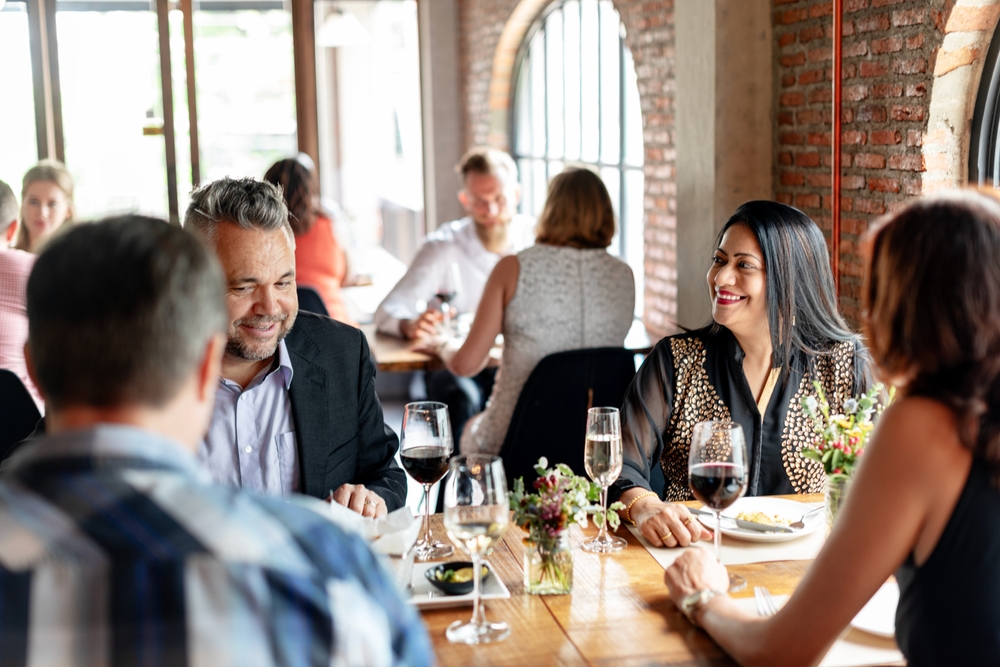
It’s Friday night, the playlist is turned up, the bar TVs are carrying two different games, and a couple at a corner table is leaning across their plates just to hear each other. Nobody planned it that way. Most loud dining rooms get there gradually, as speakers and screens are added one at a time and the volume creeps upward with the crowd.
The commercial audio visual systems Naples has to offer vary widely, but the ones that work in restaurants start with a simple question: how should guests hear and see during a meal? In this guide, we’ll break down what a restaurant setup should include and how to keep sound from swallowing the room. Keep reading to learn more!
What is the best AV system for a restaurant?
 There isn’t one best package. The setups that work in restaurants are distributed and zoned: sound comes from many small speakers at low volume, and each area can be controlled on its own. Layout matters more than brand, since two loud corner speakers will blast the nearest tables and leave the far ones straining, however good the amplifier is.
Spread sound across many small speakers
Ceiling or pendant speakers spaced evenly over the dining area let every table hear music at about the same comfortable level. Spacing depends on ceiling height and each speaker’s coverage pattern, so rooms with high open ceilings often use pendants hung closer to the tables. Restaurants that host live bands face a different decision, usually between line array and point-source speaker designs, since a stage needs projection that background speakers aren’t built to deliver.
Divide the space into zones
Each part of a restaurant has its own job, so the sound should change from one area to the next. A typical layout includes:
- Dining room: low background music, with nothing from the TVs competing at the tables.
- Bar: more energy, plus the ability to carry a game broadcast when it matters.
- Patio: weather-rated speakers that can run a little louder over outdoor noise, with a volume limit if neighbors are close.
- Private dining room: its own source and volume control, plus a microphone input for toasts or presentations.
Place screens for sightlines
TVs belong where guests choose to watch, such as above the back bar or along the wall the high-tops face. Watch for glare from windows, and keep mounts low enough that viewers aren’t craning their necks. Menu boards and promotional screens follow the same logic, because digital signage that guests actually notice goes where people pause, like the host stand or the counter line.
How do you keep music and TV audio from overwhelming conversation?
Set background sound below the level of normal speech, and keep TV sound out of the dining area unless guests are there to watch. It sounds simple, but noise feeds on itself: once music competes with conversation, people talk louder, the room gets louder, and someone nudges the volume up to compensate.
Normal conversation sits around 60 decibels, and guides to the decibel levels of everyday sounds list restaurants and bars among common sources of louder noise. They also offer a quick test: if you have to raise your voice to be heard at arm’s length, the room is likely above 85 decibels.
Set levels around speech
Music should stay below the conversation at every table, including the ones farthest from the host stand where managers tend to check it. Song choice counts too. Tracks with prominent vocals compete directly with speech, so instrumental or vocal-light playlists usually let people talk more comfortably at the same volume.
Let processing handle the adjustments
Riding the volume by hand rarely works, since staff are busy and the right level shifts as the room fills. That job belongs to a digital signal processor that manages levels across every zone. Once programmed, it can:
- Use an ambient-sensing microphone to keep music a set margin above room noise as the crowd changes.
- Cap maximum volume so a late-night playlist can’t creep too high.
- Trim the frequencies that clash most with speech.
- Recall presets like lunch service or game night from one wall panel.
Keep TV sound where it’s wanted
TV sound usually belongs in the bar zone only, and only when a game or event calls for it. Dining-room screens can run closed captions, so the picture stays useful without adding another voice. On big game nights, a preset can send the broadcast to the bar speakers while the dining room keeps its usual music.
Account for hard surfaces
Tile floors and glass reflect sound back into the room, so every source seems louder than it is. Acoustic panels and upholstered seating absorb some of that energy, and in a reverberant space they can help conversation more than any volume setting.
Who’s the leading expert in commercial audio visual systems near me in Naples?
 Restaurant owners across Southwest Florida can turn to Liaison Technology Group. Our local team brings more than 25 years of experience designing distributed sound and video for hospitality and retail clients throughout the region, and we’re a state-certified Low-Voltage Contractor.
Each project starts with an in-depth consultation about how your space runs during service.
After installation, our team configures everything and walks your staff through the controls, so the bar can get loud on game night while the dining room stays relaxed.
Whether your restaurant is near Waterside Shops or farther down the coast, reach out to us to talk through your floor plan.
