
Most Common Network Bottlenecks in Event Spaces (& How to Fix Them)

Unlike a traditional office, where usage is fairly predictable, an event space can go from quiet to fully active in a matter of hours. Guests arrive with multiple devices, vendors bring their own systems, production teams need dependable connections, ticketing platforms must stay online, and staff rely on fast communication to keep the event moving. When the network is not planned for those peak moments, even a beautifully designed space can feel disorganized.
Reliable event spaces data solutions are all about designing a network that can support the rhythm of live events without slowing down at the worst possible time. From guest access and point-of-sale systems to AV production, security, livestreaming, and back-office operations, every connection has a role. The goal is to identify bottlenecks before they interrupt the experience, then build a system that handles real-world demand with stability and control.
What are the most common causes of network bottlenecks during live events?
The most common network bottlenecks in event spaces usually come from one problem: the network was designed for normal use, not peak use. A venue may seem perfectly functional during a walkthrough, but the demands change once hundreds or thousands of guests, staff members, vendors, performers, and production teams arrive at the same time.
Insufficient bandwidth
If the internet service feeding the building is not strong enough, every connected system has to compete for the same limited capacity. Guests uploading videos, attendees checking in, vendors processing payments, and event teams managing digital systems can quickly overwhelm the connection. This creates slow load times, dropped sessions, lagging livestreams, and frustrated users.
Limited Wi-Fi coverage

Event spaces often have challenging layouts with ballrooms, meeting rooms, outdoor areas, lobbies, back-of-house corridors, thick walls, high ceilings, decorative finishes, and large crowds that affect signal strength. Access points placed without a proper wireless survey may leave certain areas underserved, while others become overcrowded.
Poor device density
A network may support a small team during the week but struggle when every guest brings a phone, tablet, smartwatch, or laptop. During conferences, galas, trade shows, corporate events, and performances, the number of connected devices can rise dramatically. Without capacity planning, the network may technically have coverage but still fail to deliver reliable performance.
Weak segmentation
Guest Wi-Fi, ticketing systems, payment terminals, AV equipment, security cameras, building controls, and administrative devices should not all compete in one flat network environment. When traffic is not separated and prioritized, recreational guest usage can interfere with operational systems that need to remain stable.
Outdated switching & cabling
Even if the internet plan is strong and Wi-Fi equipment looks modern, old cabling or underpowered switches can limit speed, power delivery, and traffic flow. This is especially common in venues that have expanded over time without a full infrastructure review.
From bottleneck to blueprint
The best way to fix these problems is to look at the venue as a full system, not as a collection of individual devices. A strong plan should evaluate:
- The internet service and backup connection options
- Cabling pathways, switch capacity, and equipment rooms
- Wi-Fi coverage and device density in every event area
- Guest, staff, vendor, AV, and payment system traffic
- Security, access controls, cameras, and building systems
- Outdoor spaces, temporary event zones, and overflow areas
Once the weak points are clear, the right fixes become easier to prioritize. A venue may need stronger bandwidth, dedicated circuits, or a backup connection for redundancy. If wireless performance is the issue, a professional Wi-Fi redesign can improve access point placement, signal strength, roaming, and capacity. If guest traffic is competing with critical systems, segmentation and traffic prioritization can help protect ticketing, payment, production, and administrative operations.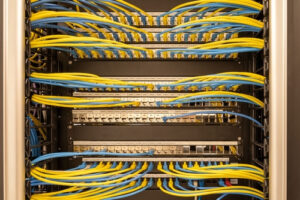
For many event spaces, the best solution is a layered upgrade. Cabling may need to be improved before new access points can perform properly, while switches may need to support Power over Ethernet devices, VLANs, and better traffic management. Security should also be built into the plan, with simple guest access kept separate from internal systems and temporary vendor access carefully controlled. Event-day support matters, too. Monitoring, documentation, clear system priorities, and rapid troubleshooting procedures will prevent a minor slowdown from becoming a visible disruption.
Who should I call for cutting-edge event spaces data solutions?
If you’re looking for a strong event network that supports the atmosphere of the venue without calling attention to itself, Pro Audio Services is your top-rated team of certified and experienced network analysts. We design event space networks around real occupancy, guest behavior, operational priorities, and long-term flexibility. From cabling and switching to wireless coverage, segmentation, redundancy, and event-day support, we can help you identify the weak points and build a smarter plan.
From designing robust network systems for places of worship and data upgrades and redesigns for campuses to systematic data network planning for healthcare facilities and so much more, we ensure hassle-free connection, workflows free of delays, payments that are processed smoothly, and secure access for your personnel at all times.
Reach out to schedule a free consultation and create an event network that keeps every event moving without a hitch from arrival to closing remarks. Call us today!
